When companies fail to align their values with daily decisions, it creates confusion, erodes trust, and impacts outcomes. Research shows that organizations with strong value alignment experience 21% higher profitability and 41% lower absenteeism. But how do you ensure values guide everyday work? Enter the V2MOM framework - a tool that connects vision, values, and measurable actions.
V2MOM Framework Overview:
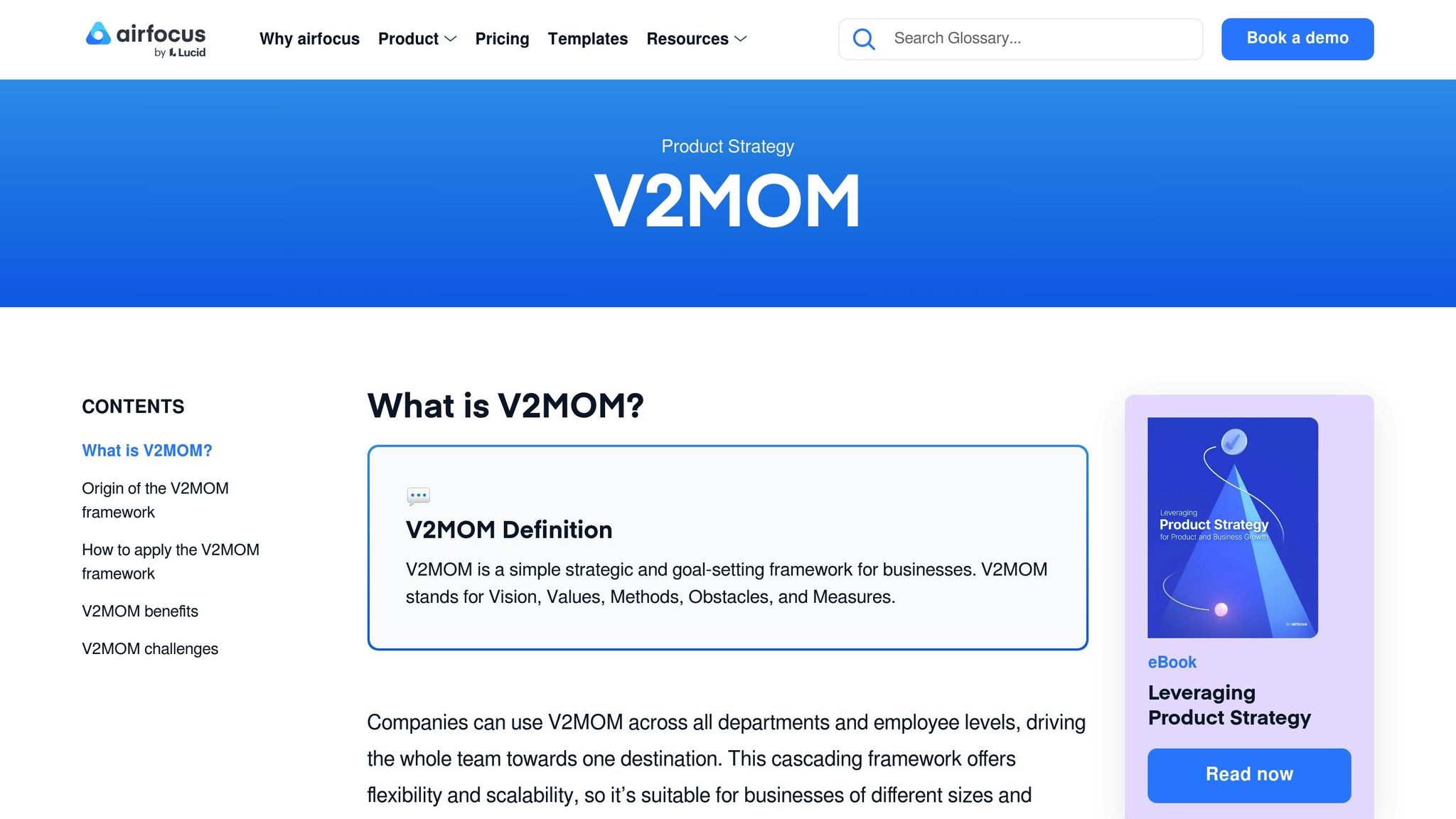
- Vision: Defines your end goal.
- Values: Core principles guiding decisions.
- Methods: Actionable steps to achieve the vision.
- Obstacles: Challenges to overcome.
- Measures: Metrics to track progress.
This guide walks you through using V2MOM to:
- Define clear, actionable values.
- Link values to measurable business goals.
- Turn values into specific, role-based actions.
- Track progress with metrics and accountability.
- Regularly review and refine the framework.
Key takeaway: Values must be more than words - they need to shape decisions, actions, and results. Let’s dive into how to make that happen.
V2MOM: The Salesforce Management Process | Vision, Values, Methods, Obstacles, Measures
Step 1: Identify and Define Core Organizational Values
The first step in aligning values is figuring out what your organization truly stands for. It’s about uncovering the guiding beliefs that influence everything - from hiring decisions to product strategies.
Values act as a moral compass, helping to navigate tough decisions and competing priorities. But here’s the thing: values are only effective if they’re specific, actionable, and genuinely reflect what your organization cares about.
Start by looking at your company's vision. What future are you working toward? Your values should support that direction. For example, if your vision revolves around being customer-focused, values like "customer-first thinking" or "radical transparency" might make sense. If your focus is on technology and innovation, you might lean toward values like "continuous learning" or "calculated risk-taking."
The goal is to make your values practical - something employees can actually use. A word like "integrity" sounds great, but what does it mean in real life? Does it involve admitting mistakes? Avoiding shortcuts on quality? Being upfront about pricing? The more specific you are, the more useful your values will be.
Involve Stakeholders in Defining Values
Once you’ve outlined some core values, it’s time to bring in different perspectives to refine them. If leadership defines values in isolation, they risk missing the mark. Employees on the frontlines often have a clearer view of day-to-day challenges, customer interactions, and workplace culture. Including voices from across the organization ensures the values resonate with everyone.
Salesforce provides a great example of this. When Marc Benioff introduced the V2MOM framework, employees at all levels were involved in shaping the company’s values. This collaborative process helped build a unified culture where values weren’t just words on paper - they were deeply embedded in daily operations [1][3]. Instead of a top-down directive, it became a shared effort, giving employees a sense of ownership.
To make this process effective, include leadership, managers, and frontline employees. Each group brings something valuable. Leadership focuses on long-term goals, managers understand workflows and bottlenecks, and frontline employees bring firsthand knowledge of customer interactions and workplace realities.
Use tools like workshops, surveys, or focus groups to gather input. Create an open environment where people feel comfortable sharing what they believe the organization stands for - and where it could improve. Ask specific questions to uncover key principles and behaviors that align with your vision.
This inclusive approach doesn’t just produce better values - it builds trust. When employees see their input reflected in the company’s principles, they’re more likely to embrace and embody those values. It bridges the gap between personal beliefs and organizational goals, turning abstract ideas into real, actionable behaviors.
Choose Values That Reflect Your Vision
Your values should directly tie into your vision. It’s not about picking words that sound impressive - it’s about selecting principles that genuinely support where your organization is heading. Ask yourself, “How does this value help us achieve our vision?”
Test each potential value against your vision statement. For instance, if your vision includes leading your industry while promoting environmental responsibility, values like "sustainability" and "community" might be a natural fit. If rapid innovation is your goal, you might focus on "experimentation" and "learning from failure." The connection should feel natural, not forced.
This approach aligns with Salesforce’s environmental initiatives, where their values directly supported their sustainability goals [1].
Your values should also reflect what makes your organization distinct. What do employees and customers already associate with your brand? For example, if your company is known for speed and adaptability, a value like "move fast and adapt" might resonate. If thoroughness and quality define your brand, "excellence in execution" could be a better fit.
Keep the list short and focused. Three to five values are easier to remember and apply than a lengthy list. Too many values dilute their impact. Stick to the beliefs that will have the most influence on achieving your vision.
Make sure your values are written in plain, straightforward language. Avoid corporate jargon or buzzwords that sound impressive but mean little. For instance, "customer obsession" is clearer than "stakeholder-centric value optimization." Use words that everyone in the organization can understand and apply.
Finally, your values should translate into observable actions. For example, "innovation" becomes actionable when defined as "test new ideas quickly and learn from failures." Similarly, "teamwork" is clearer as "share knowledge openly and support colleagues’ success."
Defining values isn’t a one-and-done process. As your organization evolves, your values may need to be revisited. Periodically review them during strategic planning sessions to ensure they still align with your vision. This doesn’t mean changing them frequently, but it does mean making sure they stay relevant.
When your values truly reflect both your vision and what makes your organization unique, they become powerful tools for alignment. They help employees understand not just what they need to do, but why it matters and how their work contributes to the bigger picture. With these values clearly defined, you can move forward and integrate them into your broader business objectives.
Step 2: Align Values With Vision and Business Objectives
Once you've identified your core values in Step 1, the next move is to connect those values to measurable goals. Think of your vision as the destination and your values as the roadmap. When these two align, they create a framework that steers every decision you make.
A great example of this alignment is the V2MOM framework, introduced by Marc Benioff during Salesforce's early days. It ensures that every team member, regardless of their role, is on the same page. The framework follows a specific sequence - Vision → Values → Methods → Obstacles → Measures - with each step building logically on the last [1][2][3]. This approach helps you evaluate how your values actively support your vision before diving into the details of execution.
Imagine aiming to be the top provider of sustainable technology solutions, yet your values don’t include environmental stewardship or innovation. Without that alignment, your team won’t have the guiding principles needed to make decisions that support your vision. Values act as a compass, especially when challenges arise, keeping everyone focused on what matters most [3].
Map Values to Business Goals
To connect your values to business goals, start by listing each core value and identifying the objectives it supports. For instance, if "customer-centricity" is a core value, a related goal might be improving customer satisfaction scores by 20% within the year.
This process ensures that every business goal is tied to a value, while also highlighting any disconnects. If a major objective doesn’t align with your values, it might be time to either refine your values or reconsider the objective's place in your strategy.
Encourage your teams to ask questions like, “How does this decision reflect our value of collaboration?” or “Does this action align with our commitment to innovation?” These types of questions promote long-term thinking and ensure that actions stay true to your organization's principles.
Tools like V2MOM.io can help visualize these connections. Its interactive dashboards let teams track how values influence progress in real time, showcasing performance metrics and key indicators. This clarity ensures that every role contributes meaningfully to the bigger picture.
Specificity is key here. Don’t just say a value supports a goal - spell out how. For example, if “transparency” is a core value and your goal is to improve employee retention, you might introduce monthly town halls where leaders share financial updates and strategic plans. Or, if “continuous learning” is a value and your goal is to launch three new products, you could allocate 10% of work time for skill development and create cross-functional innovation teams. These specific actions turn abstract ideas into measurable behaviors.
Once values are clearly tied to goals, the next step is ensuring everyone in the organization is on board.
Get Organization-Wide Buy-In
Securing buy-in across the organization isn’t a one-and-done announcement - it’s an ongoing effort that requires communication, action, and involvement. Start by explaining how values relate to each team’s work. For example, sales teams should understand how values shape customer interactions, product teams need to see how values guide feature development, and operations should know how values influence process decisions.
Storytelling can make values feel real. Share examples of how living your values has led to success. For instance, if a team member made a tough call based on the value of “integrity,” highlight that story in a company meeting. These narratives help employees see what it looks like to put values into action.
Leaders play a critical role here. When they model value-driven behavior and hold themselves accountable, trust grows naturally. For example, if transparency is a core value, leaders should openly share both wins and setbacks. If empowerment is a priority, involve teams in decision-making processes.
Tools like V2MOM.io make collaboration easier by providing a shared space where teams can create, track, and update goals together. This visibility shows employees how their work ties back to the organization’s values, reinforcing the idea that values are a shared responsibility, not just a leadership directive.
Regular updates and recognition also help solidify buy-in. Celebrate milestones that reflect your values. For instance, if “innovation” is a core value and a team successfully pilots a new approach, acknowledge that achievement publicly. These celebrations remind everyone that values are the foundation of your organization’s success.
It’s also important to track engagement. Metrics like V2MOM creation rates, approval rates, and check-in frequency can reveal whether teams are actively engaging with value-driven goals. If certain teams lag, it might indicate a need for clearer communication or additional support. Address these gaps with targeted conversations and resources.
Building organization-wide buy-in is an ongoing process. Through consistent communication, real-world demonstrations, and reinforcement, employees will see how values shape decisions and outcomes. Over time, this alignment transforms values into a powerful force that connects individual contributions to the broader vision.
Step 3: Turn Values Into Specific Actions
Once you've defined your values and aligned them with your vision, it's time to bring them to life through actionable steps. Without clear actions, values risk becoming empty slogans.
The challenge here is to translate each value into specific, practical methods. These methods represent the "how" of achieving your vision while staying true to what you believe. In the V2MOM framework, methods are the tangible steps that ensure your values are reflected in everyday operations. They answer a critical question: "What actions do we need to take to make this value a reality?"
Create Actionable Methods
Start by asking yourself, "What does this value look like in practice?" Then, define 1-2 initiatives or projects that directly reflect that value. For example, if your core value is "transparency", you could implement weekly all-hands meetings with open Q&A sessions or create a centralized knowledge base accessible to everyone in the company.
To avoid vagueness, use the SMART framework - Specific, Measurable, Achievable, Relevant, and Time-Bound. For instance, instead of saying "improve communication", aim for something more concrete like "Launch a monthly customer feedback review process by the end of Q2."
When developing methods, aim for 5-8 clear, actionable items directly tied to your values and goals. Any more than that, and you risk losing focus. Prioritize effectively by ranking methods based on their impact and urgency, ensuring the most critical actions get attention first.
It's also important to think about how a value applies across different functions. If "customer-first thinking" is one of your values, your sales team might conduct post-sale check-ins within 48 hours of a purchase. Meanwhile, your product team could include customer feedback sessions in every sprint planning meeting, and your support team might aim to resolve 90% of customer issues within 24 hours. Each method reflects the same core value but tailors it to specific workflows.
Integrate these values into regular meetings and project planning. During sprint planning, teams can ask, "How does this task reflect our value of collaboration?" At project kickoffs, discuss which methods align with which values. This approach bridges the gap between lofty principles and day-to-day tasks, making values relevant and actionable.
Tools like V2MOM.io can simplify this process by helping you document, track, and share methods across your organization. The platform provides a centralized hub to define and visualize the "Methods" component of your V2MOM, ensuring alignment with your Vision and Values. With AI-powered guidance, you can refine methods to make them more actionable and specific, turning the process into a collaborative effort rather than a top-down directive.
This alignment should cascade throughout the organization. Corporate methods should flow naturally into individual and team V2MOMs. Managers can work with their teams to break down corporate methods into department-specific actions. This creates a seamless chain of execution, ensuring everyone understands how their work connects to the company’s broader values.
Once methods are established, the next step is to assign responsibilities and set timelines.
Set Timelines and Assign Responsibilities
To ensure your methods are executed effectively, you need to clarify ownership and deadlines. Each method should have a designated owner, complete with their name, role, and accountability metrics. This eliminates ambiguity and ensures follow-through.
Using a RACI matrix (Responsible, Accountable, Consulted, Informed) can help clarify roles. For example, a project manager might be Responsible for aligning team activities with the value of "collaboration", while a department head is Accountable for overall results. Team members can be Consulted on implementation details, and stakeholders are Informed of progress. This structure prevents confusion about who is doing what.
Set realistic start dates, milestones, and deadlines for each method. Larger methods can be broken into smaller, manageable checkpoints. For example, if your method is "Launch a new employee suggestion program", break it down into steps like "Complete manager training on empowerment techniques by the end of Q2", "Pilot the program in two departments by mid-Q3", and "Roll out company-wide by the end of Q3."
Platforms like V2MOM.io can help visualize team hierarchies and link individual V2MOM goals to specific roles. Interactive dashboards make it easy to track progress, ensuring that everyone knows who is responsible for what and how their work connects to the bigger picture.
Regular check-ins are critical to keeping methods on track. Weekly team meetings can include updates on value-driven initiatives, while monthly reviews can assess whether timelines remain realistic or if methods need adjustments. This feedback loop ensures actions stay aligned with your organization's values and objectives.
Flexibility is key. Recognize that plans may need to shift as circumstances evolve. Regular review cycles allow you to assess progress, address obstacles, and refine methods as needed. This doesn't mean compromising on your values - it means adapting your approach to ensure they remain actionable in a changing environment.
Tracking engagement metrics can reveal how well teams are implementing these methods. Metrics like V2MOM creation rates, approval rates, and check-in frequency can show whether value-driven actions are becoming part of daily work or staying theoretical. If certain teams fall behind, it might indicate a need for clearer communication, additional training, or resource adjustments. Address these gaps with targeted support.
The ultimate goal is to make values visible in everyday work. When team members can point to specific tasks and say, "This reflects our value of transparency", you know you've successfully turned abstract principles into concrete actions. This clarity transforms values from aspirational statements into the operational backbone of your organization.
sbb-itb-ee93501
Step 4: Track Progress and Establish Accountability
After defining your values and aligning them with actionable goals, the next step is ensuring those values are lived out through measurable progress. Without tracking and accountability, even the best intentions can fizzle out. This stage is all about making your values tangible by tying them to observable behaviors and outcomes.
In the V2MOM framework, this is where "Measures" come into play. These metrics provide a clear way to track success and gauge whether your values are making an impact.
Create Metrics for Value Alignment
Start by identifying key performance indicators (KPIs) that directly connect to your core values. These should be clear, quantifiable, and linked to real business outcomes. For instance, if "customer-centricity" is a core value, you might track customer satisfaction scores or Net Promoter Scores (NPS). If "collaboration" is a priority, consider metrics like the number of cross-functional projects completed or team engagement scores from surveys.
Use both leading indicators - like the frequency of customer feedback sessions - and lagging indicators, such as annual retention rates or revenue growth. Together, these metrics provide a full picture of how well your values are being upheld.
When setting these measures, ensure they are specific and actionable. For example, instead of a vague goal like "improve transparency", aim for something measurable, such as "Increase employee survey scores on transparency by 15% by the end of Q4" or "Publish monthly progress updates with 100% on-time delivery."
Here are some examples of value-aligned KPIs:
- Employee engagement scores for values like empowerment or teamwork
- Customer satisfaction ratings for customer-first initiatives
- Diversity metrics for values tied to equity
- Turnover and retention rates for values like integrity and transparency
- Cross-functional project counts for values centered on innovation
Salesforce provides a great example of this in action. For their sustainability efforts, they tracked specific metrics like water and energy consumption, the percentage of sustainable energy usage, and the ROI of green technology - all aligned with their goal of achieving a zero environmental footprint [1].
To make your measures effective, ensure they are SMART: Specific, Measurable, Achievable, Relevant, and Time-bound. Involve your team in defining these goals so they feel invested in the outcomes. And make sure individual and team metrics align with the broader organizational goals to keep everyone focused and cohesive.
Finally, don’t just rely on numbers. Combine these KPIs with qualitative insights, such as feedback from 360-degree reviews or pulse surveys, to get a fuller picture of how well your values are being integrated into daily work.
Monitor and Adjust in Real Time
Once your metrics are in place, the next step is consistent monitoring. Values are not static, and your tracking system shouldn’t be either. Set up regular review cycles - monthly or quarterly - to assess progress and make adjustments as needed.
This is where tools like V2MOM.io can be incredibly helpful. Its real-time dashboards and AI-powered insights track key metrics, such as goal creation, check-in frequency, and approval rates. These tools can flag issues early, like low participation in value-driven initiatives, so you can address them before they escalate.
For example, if customer satisfaction scores drop while "customer-centricity" is a core value, you can quickly intervene with targeted training or allocate additional resources. The goal is to make your data actionable without overburdening your team with extra reporting.
V2MOM.io also links individual goals to broader objectives, fostering alignment and transparency across teams. Its collaboration features let teams work together to set, track, and update goals, creating shared accountability. When progress is visible to everyone, it naturally encourages peer support and collective ownership of your values.
In addition to quantitative tracking, gather ongoing feedback from employees and customers to ensure your values are being experienced as intended. Metrics might look strong, but qualitative feedback can uncover gaps that numbers alone can’t explain. Look for trends over time rather than reacting to single data points - a one-month dip might not be a problem, but a consistent decline signals the need for action.
Stay flexible. The V2MOM framework is a living document that should evolve with your organization. If a particular measure isn’t working, refine it. If market conditions or internal priorities shift, adjust your goals to reflect those changes while staying true to your core values.
Leadership plays a crucial role in this process. Leaders should model the behaviors they want to see, review value-related metrics regularly, and recognize team members who embody the organization’s values. When leaders show that values matter, it sets the tone for the entire organization.
Finally, make progress visible. Share dashboards, celebrate wins, and openly discuss challenges. This transparency reinforces the idea that value alignment is an ongoing process - one that thrives on honesty and continuous improvement. By embedding these practices into your daily operations, your values become more than just words - they become part of how your organization works every day.
Step 5: Review, Refine, and Repeat
Once you've established your V2MOM framework, it's crucial to keep it aligned with your organization's evolving goals. Regular reviews ensure that your framework stays relevant amidst shifting markets, growing teams, and changing priorities. Without this ongoing effort, even the best-crafted V2MOM can become outdated, leading to wasted resources and missed chances to address potential issues early. By actively revisiting and refining your V2MOM, you signal to your team that it's more than just a static document - it's a dynamic tool for guiding decisions throughout the year.
Set Up Regular Review Cycles
To stay on track, establish a schedule for reviews. Quarterly reviews combined with monthly check-ins work well for many organizations. Startups or smaller companies might opt for monthly reviews to stay agile, while larger enterprises often align reviews with fiscal quarters, supplemented by monthly departmental updates.
The goal is balance: reviews should happen often enough to catch misalignment early but allow enough time for meaningful progress. Flexibility is also key - be ready to conduct ad-hoc reviews when unexpected events like market disruptions, leadership changes, or strategic shifts arise. These moments demand immediate attention to ensure your V2MOM remains actionable.
Each review cycle should assess your framework across three key areas: business strategy, market conditions, and organizational culture. Begin by asking if your core values still align with your vision. If your vision has shifted, your values may need adjustment. Then, evaluate whether these values are reflected in daily operations by looking at hiring practices, resource allocation, and employee feedback.
Keep an eye out for warning signs of misalignment. These might include a drop in employee engagement, especially around understanding company direction and values, or increased turnover among top talent citing a disconnect between stated values and actual practices. Other red flags include stalled initiatives, conflicting team priorities, negative customer feedback about service delivery, and leadership decisions that contradict the organization's values.
When warning signs emerge, act quickly. Conduct a diagnostic review to uncover root causes, such as unclear communication, resource gaps, or a mismatch between vision and values. Bring key stakeholders together to address these issues, update the V2MOM framework if necessary, and communicate any changes clearly across the organization.
Leverage Frontline Insights
Frontline employees play a critical role in ensuring your V2MOM stays grounded in reality. They often have the clearest view of what’s working, what’s not, and where obstacles exist. Create formal channels - like surveys, focus groups, or suggestion systems - to gather their feedback.
For instance, a sales team might point out that a company value like "integrity" feels at odds with aggressive sales targets, or an operations team might highlight how a specific method is causing bottlenecks. By incorporating this feedback into your reviews, you not only improve the quality of your refinements but also show employees that their input matters.
Tools like V2MOM.io can simplify this process by offering real-time dashboards to track performance metrics and engagement. These tools can help you monitor how often teams check in on their V2MOMs, identify areas of misalignment, and ensure values are effectively integrated into daily operations.
Adapt Values to Changing Objectives
While core values should remain relatively stable - serving as the foundation of your organization - methods and measures need to be flexible. They should adapt to new challenges, technologies, and market demands.
Take "customer-centricity" as an example. While this value might remain constant, the methods to achieve it could evolve from in-person support to omnichannel strategies or even AI-driven personalization. Similarly, the metrics used to track success might shift from customer satisfaction scores to net promoter scores or customer lifetime value as the organization grows.
During reviews, ask two key questions: "Do our core values still represent who we are and where we want to go?" and "Are our methods and measures still effective for operationalizing these values?" If the answer to the first is yes, keep your values consistent. If the answer to the second is no, update your methods and measures to reflect current realities.
When refining your framework, start by identifying what has changed - whether it’s market conditions, competitive dynamics, or internal capabilities. Reassess obstacles to see which remain relevant and which need replacing. For example, a startup that once struggled with "limited market awareness" might now face challenges like "scaling operations" or "maintaining quality during rapid growth." Similarly, methods that worked for a small team may need adjustment to support a larger, more complex organization.
Involve cross-functional teams in this process to gather diverse perspectives. Document the reasons behind any changes to maintain transparency and team alignment.
Keep Everyone Aligned
Once updates are made, cascade the revised V2MOM throughout the organization. Ensure that individual, team, and departmental frameworks align with the overarching corporate strategy. This creates clarity, helping employees see how their contributions connect to the bigger picture.
Integrate V2MOM principles into everyday management practices. Discuss values during one-on-one meetings, reference methods during project planning, and celebrate achievements that reflect organizational values. Tie performance reviews and recognition programs to how well employees embody these values and execute their methods.
Establish feedback loops where employees can report when methods stop working or when new challenges arise. This keeps the framework relevant and ensures it doesn’t become disconnected from daily operations.
Leadership plays a pivotal role in making reviews meaningful. Leaders should actively participate in review cycles, model desired behaviors, and communicate updates transparently. When leaders prioritize the V2MOM framework - not just during annual planning but throughout the year - it sets a clear example for the entire organization.
Finally, make progress visible. Share dashboards, celebrate wins, and openly discuss challenges. This transparency reinforces the idea that alignment is an ongoing process, driven by honesty and continuous improvement. By treating V2MOM as a living framework, you ensure it evolves alongside your business, guiding decisions and keeping your organization on course through any changes.
Common Mistakes in Value Alignment (and How to Avoid Them)
Even with a structured framework like V2MOM, organizations often struggle to align their values with everyday actions. Recognizing where others falter - and knowing how to sidestep these missteps - can save time, effort, and frustration. By focusing on actionable values and avoiding common pitfalls, you can ensure that your values genuinely drive meaningful action.
Vague or Generic Value Statements
One of the biggest errors organizations make is creating values that sound impressive but lack substance. Words like "innovation", "excellence", or "teamwork" might look good on paper, but without clear definitions, they fail to provide any real guidance. Employees are left guessing how these values apply to their daily decisions, which makes it nearly impossible to act on them.
Unclear values also disrupt the V2MOM framework. If the "Values" component isn't specific, it's hard to design actionable "Methods" or set measurable "Measures." Without this clarity, success becomes impossible to define.
The solution? Make your values specific and actionable. For instance, instead of a vague statement like "collaboration", spell out what it looks like in practice: "We collaborate by involving cross-functional teams in decision-making to ensure diverse perspectives shape our solutions." This gives employees a clear understanding of what the value means and how to apply it.
Another common issue is having too many values. When organizations list eight, ten, or more, employees can't remember or consistently apply them. To avoid this, focus on three to five core values - the ones that truly matter. Ask yourself: If we could only emphasize a few principles, which would have the biggest impact on our success and culture? Each value should stand on its own, without overlapping, and reflect what your organization actually prioritizes - not an idealized version of what you wish to be.
Lack of Leadership Commitment
Values fall flat when leaders fail to embody them. Employees pay more attention to what leaders do than what they say. If there's a gap between stated values and leadership behavior, it undermines the entire V2MOM framework and damages trust.
For example, imagine a company that claims "customer-first thinking" as a core value, but leaders consistently prioritize short-term profits over customer satisfaction. Employees will quickly notice this contradiction and stop taking the values seriously. After all, why should they follow values that leadership ignores?
To avoid this, leaders must live the values they promote. Reference organizational values explicitly when making decisions and explain how they guide your choices. This shows employees that values aren't just empty slogans - they're active decision-making tools. Leaders should also hold themselves accountable. If they fall short, they should acknowledge it publicly and take corrective action, which builds credibility and trust.
Resource allocation is another way to demonstrate commitment. Invest time and budget in initiatives that align with your values. For instance, if "innovation" is a core value, make sure employees have time to experiment, funding for new ideas, and recognition for creative efforts. Otherwise, the value remains aspirational rather than actionable.
Finally, tie leadership evaluations and compensation to value alignment. When leaders are measured on how well they embody and promote organizational values, it reinforces that the V2MOM framework is a genuine guide for behavior - not just a planning tool.
Failure to Apply Values in Daily Work
Even when leadership is fully committed, values can still fail if they're not integrated into everyday operations. This disconnect - often called the "values-behavior gap" - happens when employees understand values in theory but don't see how they relate to their specific roles or tasks. Without clear connections, even the most well-meaning employees can't put values into practice.
Abstract values become background noise: visible, but ultimately ignored. To bridge this gap, organizations need to map values to specific actions and responsibilities. For example, a sales team's approach to "integrity" might involve transparent pricing and honest communication with clients, while an engineering team's interpretation could focus on delivering reliable and ethical solutions. Providing role-specific examples helps employees understand how to apply values in their unique contexts.
Incorporate values into hiring, onboarding, and performance evaluations. Assess candidates for alignment with your values during interviews. Set clear expectations during onboarding about how values guide daily work. Evaluate employees not just on results, but also on how well they embody the organization’s values. This reinforces that values are integral to success, not just nice-to-have statements.
Decision-making frameworks can also help operationalize values. For instance, when considering new projects, you might prioritize those that align with values like "sustainability" or "community impact." This gives employees a concrete way to factor values into their choices.
Regularly review whether daily operations reflect your stated values. Ask teams: Are we making decisions based on our values? Where are the gaps? Use tools like V2MOM.io to track progress and identify areas where values aren't being fully applied. Feedback loops are another critical element. Create channels where employees can report when methods or practices contradict stated values. When employees see their input leading to meaningful changes, they'll feel more engaged and motivated to uphold the framework.
Addressing these common mistakes strengthens the V2MOM process and ensures your organization stays aligned with its values in both strategy and action. By focusing on clarity, leadership modeling, and practical application, you can turn values into a powerful driver of success.
Conclusion
Aligning values within an organization is not just a one-time task - it’s an ongoing effort that shapes decisions, priorities, and culture. The V2MOM framework offers a clear, structured approach to transform abstract values into actionable steps that lead to measurable outcomes. By following this framework, you can create alignment across your organization that evolves as your business grows.
Key Takeaways
The V2MOM framework is built on five core principles that connect values to real-world actions:
- Define clear, actionable values that guide everyday decisions. Avoid vague or generic statements - your values should provide practical guidance for daily operations.
- Tie values directly to your vision and business goals. When your values align with your objectives, teams can see how their work contributes to the bigger picture, ensuring resources are used effectively.
- Develop specific methods with timelines and accountability. Without detailed plans and responsibilities, values risk remaining aspirational rather than actionable.
- Create metrics to measure how values shape behavior. Regular reviews - whether quarterly or more frequent - help ensure your framework remains relevant and effective.
- Keep core values steady while adapting methods and measures. Treat V2MOM as a flexible tool that evolves with your business, while staying rooted in your foundational values.
When applied successfully, these principles bring tangible benefits: shared clarity across all levels, a sharper focus on strategic goals, faster decision-making, clear accountability, and measurable business results.
Next Steps for Implementation
To put these principles into action, follow this 90-day roadmap:
-
Foundation Phase (Days 1–30):
Begin by conducting stakeholder interviews to identify your current values and any gaps. Draft vision and value statements, then secure support from leadership. -
Development Phase (Days 31–60):
Refine your values through collaborative workshops, align them with business goals, and outline 5–8 priority methods with clear deadlines and assigned owners. Identify potential challenges and plan solutions. -
Activation Phase (Days 61–90):
Set up baseline metrics and tracking systems, launch communication efforts to connect values to daily tasks, and complete your first review cycle. Train managers to roll out V2MOM within their teams.
To streamline this process, consider using V2MOM.io, a platform designed to centralize and monitor your framework. It tracks engagement through metrics like creation, approval, and check-in activity, offering insights to identify bottlenecks and improve productivity. Start with the free tier (up to 5 users and 3 teams) to explore the framework risk-free. For larger teams, the Business plan costs $5.99 per user per month (billed annually) and includes unlimited users, teams, and priority support.
The key is to start small. Choose one team or department to pilot the framework, gather insights, and refine your approach based on what works and what doesn’t. Share your successes, learn from challenges, and keep communication open. Aligning values with V2MOM isn’t about achieving perfection - it’s about building a shared understanding that turns vision into action, ensuring your organization stays focused and adaptable as circumstances evolve.
FAQs
How can small startups and large enterprises tailor the V2MOM framework to their needs?
The V2MOM framework works well across the board, whether you're running a small startup or managing a large enterprise. For startups, its strength lies in its simplicity and flexibility. It helps teams define their vision, focus on immediate priorities, and tackle challenges head-on as they grow. By aligning limited resources with the most pressing goals, startups can stay on track and scale effectively.
In large enterprises, V2MOM operates on a broader scale. It can guide everything from company-wide strategy to individual team objectives. The framework provides a clear structure to align various departments, monitor progress across extensive teams, and stay true to the organization’s core values. No matter the size of the business, V2MOM ensures everyone is moving toward shared goals with clear direction and purpose.
How can leadership ensure alignment between organizational values and daily operations?
Leadership plays a key role in embedding an organization's values into everyday operations. It starts with clearly defining the vision and core values of the company and making sure these are consistently communicated at every level. But it's not just about words - leaders need to actively embody these values in their decisions and actions, setting the tone for the entire organization.
To strengthen this alignment, encourage open communication. Engage teams in conversations about how their responsibilities tie back to the organization's values. This not only helps employees see the bigger picture but also fosters a sense of purpose. Tools like the V2MOM framework can be incredibly useful for regularly assessing progress, identifying gaps, and ensuring team goals stay aligned with broader strategic priorities. By promoting collaboration and holding everyone accountable, leaders can cultivate a workplace where values aren't just statements - they're part of the daily fabric and long-term vision.
How can organizations track and evaluate the success of value alignment using the V2MOM framework?
Organizations can measure how well their values align with their goals by using tools that offer real-time progress tracking and clear performance metrics. The V2MOM framework is particularly effective, as it provides interactive dashboards that give teams a clear view of their alignment efforts, along with insights into key metrics and KPIs.
Incorporating data-driven analytics further enhances this process by pinpointing areas that need improvement and promoting accountability. By regularly reviewing how your team engages with the V2MOM framework, you can ensure that your goals, values, and strategies stay connected to both daily activities and long-term objectives.